Tracing AI-driven Personalization Patterns in Digital Wagering Ecosystems
Written by Tina Weber · Jun 2, 2026

Tracing AI-driven Personalization Patterns in Digital Wagering Ecosystems
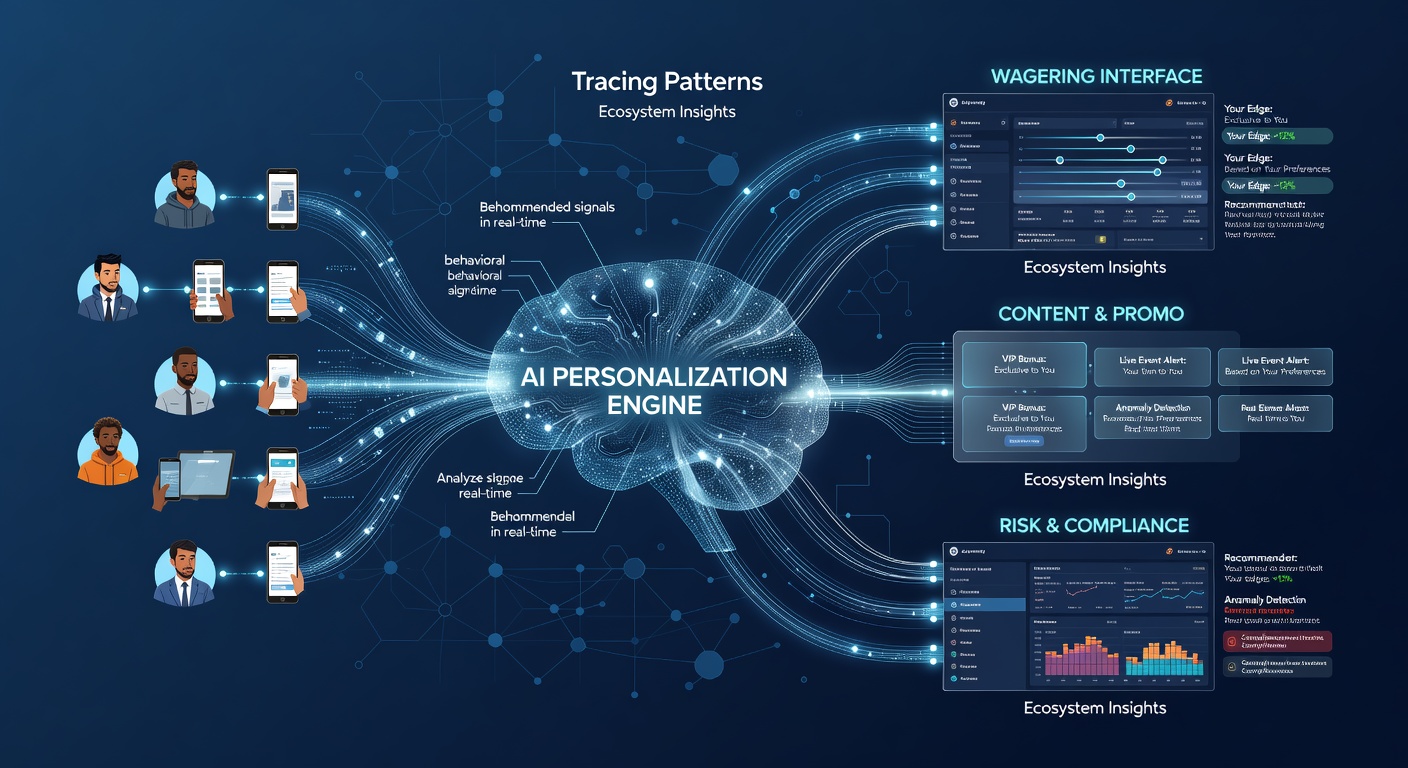
Digital wagering platforms now rely on machine learning systems that track user interactions in real time, and these systems adjust game suggestions along with interface layouts based on accumulated behavioral signals. Data streams from login times, bet sizes, session durations, and navigation paths feed into models that identify clusters of similar activity, while researchers note that such clustering allows platforms to deliver targeted content without requiring explicit user input each time.
Pattern recognition begins with feature extraction from raw logs, and algorithms isolate variables such as preferred game genres or response rates to promotional messages. These extracted features then enter supervised learning pipelines where historical outcomes train classifiers to predict future preferences, yet the classifiers update continuously as new sessions arrive so that personalization remains current rather than static.
Data Inputs Fueling Personalization Engines
Platforms collect device identifiers, geolocation tags, and payment method details alongside in-game metrics, and these inputs combine into unified user profiles that evolve with each interaction. Observers note that aggregation happens across multiple sessions because single-session snapshots often miss longer-term trends such as gradual shifts toward higher-stakes games or seasonal changes in activity peaks. External data sources sometimes supplement internal logs, including weather patterns or major sporting events that correlate with betting spikes, although integration of such external signals varies by operator and regulatory jurisdiction.
June 2026 marks a period when several jurisdictions began requiring clearer disclosure of data categories used in personalization, and this requirement prompted operators to refine their logging practices while maintaining model performance. Reports from industry monitoring groups indicate that transparency measures led to standardized data dictionaries that help auditors trace how specific inputs influence output recommendations.
Algorithmic Techniques Behind Tailored Experiences
Collaborative filtering remains common for suggesting games to users who share behavioral traits with others, and matrix factorization methods decompose user-item interaction matrices to uncover latent factors that drive preferences. Reinforcement learning agents test variations of bonus structures or interface elements on small user cohorts before scaling successful variants across larger segments, while A/B testing frameworks ensure that changes produce measurable lifts in engagement metrics. Those who study these systems point out that multi-armed bandit approaches balance exploration of new personalization rules against exploitation of proven ones, thereby reducing the risk of over-optimizing for short-term metrics at the expense of longer-term retention.
Real-time inference pipelines score incoming events against trained models in milliseconds, and edge computing nodes located near data centers help keep latency low so that users experience seamless adjustments during active sessions. Natural language processing modules analyze chat logs and support ticket text to detect sentiment shifts that may warrant interface simplifications or responsible gaming prompts, and these modules operate alongside numeric feature sets rather than in isolation.
Observed Patterns Across User Segments
High-frequency users often receive game rotations that emphasize titles with rapid round cycles, whereas infrequent visitors encounter prompts highlighting progressive jackpot games that align with occasional large-win aspirations. Time-of-day adjustments appear in several documented deployments, and morning sessions tend to feature lower-volatility options while evening windows surface higher-engagement formats, yet these temporal rules derive directly from aggregated historical data rather than predefined schedules. Geographic clustering reveals regional differences in preferred payment flows and game themes, prompting platforms to localize both content libraries and promotional calendars accordingly.
One longitudinal analysis conducted by a Canadian research consortium tracked personalization drift over twelve months and found that models retrained weekly maintained higher prediction accuracy than those updated monthly, although the accuracy gap narrowed after six months of operation. European operators participating in similar studies reported comparable outcomes when they aligned retraining cadence with changes in user acquisition sources.
Integration with Regulatory Frameworks
Regulatory bodies in multiple regions now request audit trails that map personalization decisions back to the data features that triggered them, and this mapping requirement encourages operators to maintain version-controlled model repositories. The Australian Communications and Media Authority has published guidance documents that outline expectations for algorithmic accountability in interactive wagering, and those documents emphasize record-keeping practices that allow third-party reviewers to reconstruct how a particular recommendation reached an individual account. Australian Communications and Media Authority guidance highlights the need for ongoing bias testing, especially when models incorporate demographic proxies that could inadvertently affect different user groups unevenly.
Cross-border data flows add complexity because models trained on one jurisdiction's user base may encounter different regulatory constraints when applied elsewhere, and operators therefore maintain region-specific fine-tuning layers that sit atop global base models. These layers adjust weighting coefficients without retraining entire networks, thereby preserving computational efficiency while satisfying local rules.
Future Trajectories in Model Development
Emerging approaches incorporate graph neural networks that treat users, games, and promotional actions as nodes within a dynamic graph, and message-passing layers propagate information across edges that represent observed interactions. Such architectures capture higher-order dependencies that traditional matrix methods sometimes overlook, and early deployments suggest improved handling of sparse data scenarios common among new registrants. Federated learning pilots allow multiple operators to improve shared models without exchanging raw user records, and this technique addresses privacy concerns while still benefiting from larger effective training sets.
Hardware accelerators designed for inference workloads continue to reduce the energy cost per prediction, enabling more frequent model refreshes even on platforms with tight margins. Observers tracking these developments note that energy efficiency gains also support scaling personalization to additional touchpoints such as push notifications and loyalty program tiers without proportional increases in infrastructure spend.
Conclusion
AI-driven personalization in digital wagering ecosystems rests on continuous data ingestion, iterative model training, and region-aware deployment strategies that together produce individualized experiences at scale. Documentation requirements emerging around June 2026 reinforce the need for traceable decision paths, and these requirements align with broader efforts to maintain accountability while models grow more sophisticated. Patterns observed across segments demonstrate that personalization effectiveness depends on both the quality of input features and the frequency of retraining cycles, and ongoing research continues to refine techniques that balance engagement objectives with compliance obligations.