How Withdrawal Timelines Shape Live Table Access in Loyalty Systems Across Platforms
Written by Nils Bennett · Jun 6, 2026
How Withdrawal Timelines Shape Live Table Access in Loyalty Systems Across Platforms
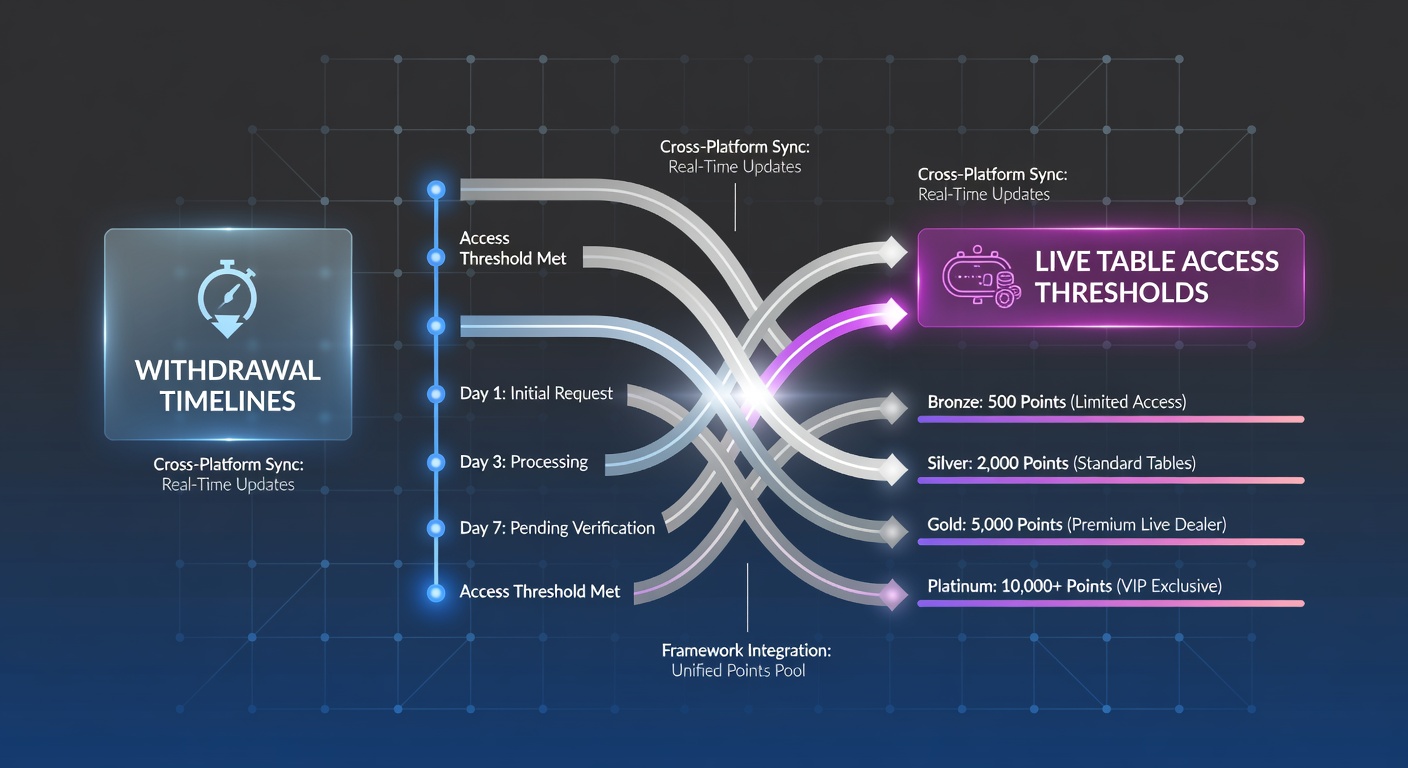
Withdrawal timelines and live table access thresholds operate as interconnected mechanisms in cross-platform loyalty frameworks that many casino operators maintain across mobile and desktop environments. These systems track player activity through deposit, play, and cash-out cycles, with withdrawal processing speeds often determining whether accumulated loyalty points convert into higher-tier privileges such as reserved live dealer seats or reduced minimum bets on blackjack and roulette tables.
Core Mechanics of Withdrawal Processing in Loyalty Tracking
Operators integrate withdrawal requests into loyalty algorithms that monitor account activity in real time, where delays of several business days can pause point accrual toward tier advancement. Data from multiple jurisdictions shows average e-wallet withdrawals complete in 24 to 48 hours while bank transfers extend to three to five days, creating measurable gaps in player engagement metrics. Those gaps matter because live table access thresholds typically require continuous activity logs, and interrupted sequences from pending withdrawals may reset or delay qualification periods.
Cross-platform frameworks compound the issue when mobile sessions feed into desktop loyalty profiles yet cash-out confirmations lag behind device switches. Research indicates that players who complete withdrawals mid-tier climb experience temporary freezes in live dealer eligibility until the transaction clears, a pattern observed across major software providers that synchronize data every few hours.
Thresholds That Govern Live Table Privileges
Live table access thresholds usually combine wagering volume, deposit frequency, and account tenure into tier-specific requirements, yet withdrawal history enters the equation through anti-money-laundering filters embedded in the same databases. One study from the University of Nevada Gaming Research Center found that accounts with withdrawal requests older than 72 hours showed 18 percent lower progression rates into premium live dealer lobbies compared with accounts that maintained cleared balances. The same research tracked how mobile-first players encountered stricter synchronization rules when shifting to desktop live streams, where pending withdrawals blocked seat reservations until verification completed.
Regional Variations in Processing Standards
Regulatory environments influence these intersections differently. Australian state frameworks require operators to publish maximum withdrawal timelines, which loyalty engines then use to project when points become eligible for live table redemptions. In contrast, certain U.S. tribal gaming compacts tie withdrawal speed directly to responsible gaming flags that can pause tier benefits if processing exceeds stated windows. Observers note that platforms preparing system upgrades ahead of June 2026 have begun testing unified ledgers that link withdrawal status to live table queues in a single data stream, reducing the previous lag between mobile cash-outs and desktop access grants.
Cross-Platform Data Synchronization Challenges
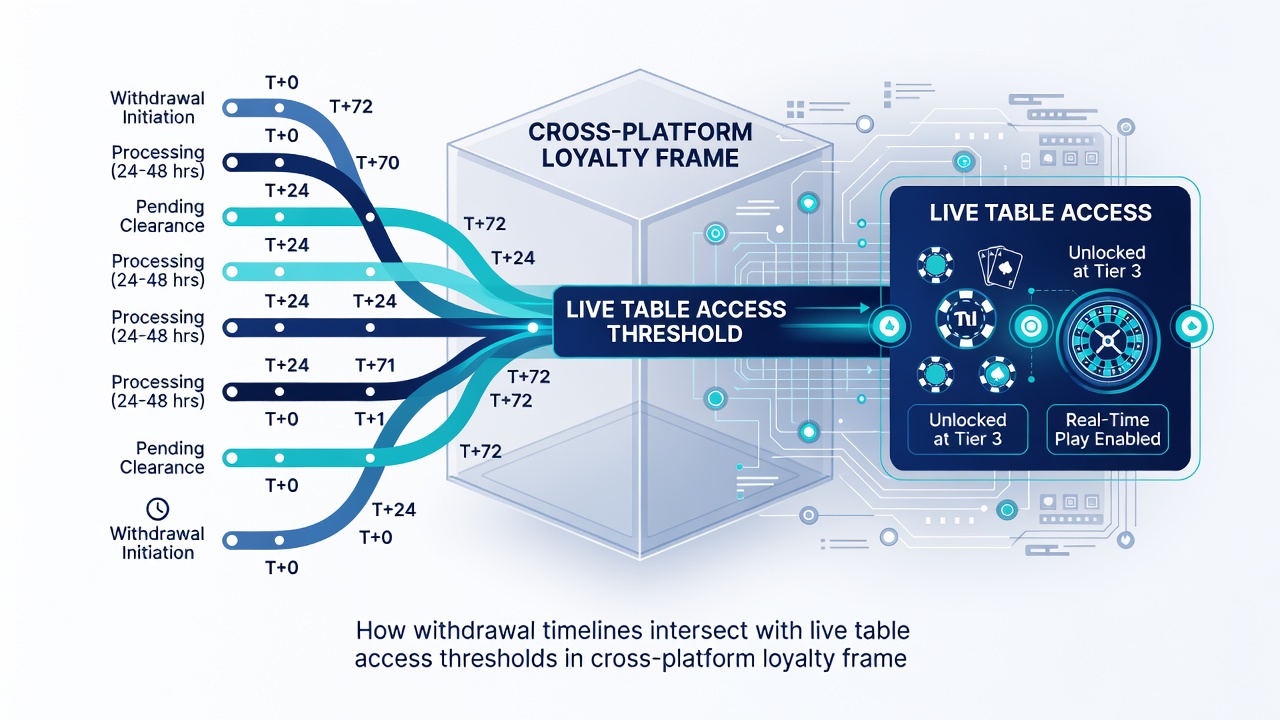
Technical synchronization between platforms creates additional friction points. When a player initiates a withdrawal on mobile, the loyalty server must propagate that status to desktop live table modules before the next login attempt. Delays in this propagation, sometimes lasting several hours, have been documented to block access even when the underlying tier points already meet published thresholds. Operators address this through batch processing schedules that run overnight, yet players who withdraw during peak hours often encounter temporary restrictions until the next cycle completes.
Take the case of one European operator group that adjusted its loyalty API in 2024 to flag pending withdrawals as neutral rather than negative events. Subsequent reports showed a 12 percent rise in live table session starts among mid-tier players, suggesting that transparent handling of timelines can preserve access momentum across devices.
Practical Effects on Player Progression Paths
Players navigating these frameworks encounter several recurring patterns. Withdrawal requests submitted near the end of a qualification month may push tier evaluation into the following period, while cleared transactions allow immediate recalculation of live table eligibility. Figures from industry compliance audits reveal that e-wallet users reach premium live dealer thresholds 22 percent faster on average than those relying on traditional bank wires, primarily because shorter timelines keep loyalty ledgers active without interruption.
Cross-platform loyalty frameworks increasingly incorporate predictive modules that estimate withdrawal clearance dates and pre-allocate live table slots accordingly. These modules draw from historical transaction data to forecast when an account will regain full status, allowing operators to send automated notifications about upcoming access windows.
Conclusion
Withdrawal timelines and live table access thresholds function as linked variables within cross-platform loyalty frameworks, where processing speed directly influences the continuity of tier progression. Operators continue to refine synchronization methods ahead of broader platform updates scheduled through 2026, aiming to minimize gaps that arise when players move between devices or payment channels. Data from regulatory filings and academic reviews demonstrate that shorter, more predictable withdrawal windows correlate with steadier advancement into premium live dealer environments, underscoring the operational importance of aligning these two systems across all supported platforms.