Cultural Dynamics Reshaping Game Choices in Worldwide Virtual Casino Spaces
Written by Devon Lorenz · Aug 25, 2026

Cultural Dynamics Reshaping Game Choices in Worldwide Virtual Casino Spaces
Virtual casino platforms continue to expand their reach across continents, and data from industry tracking services show that player selections now align more closely with regional traditions and social norms than with uniform global trends. Observers note that game libraries have grown to include localized themes, while participation rates vary sharply by cultural context. According to reports from the Asia Pacific Gambling Studies Network, baccarat tables draw steady traffic in markets where the game carries longstanding social significance, whereas slot machines featuring regional folklore maintain higher engagement in parts of Southeast Asia.
Regional Preferences Drive Library Adjustments
European operators have expanded live dealer offerings around games such as roulette and blackjack because historical records indicate these formats retain popularity among players from the United Kingdom, Germany, and France. In contrast, data compiled by the Canadian Centre for Gaming Research reveals that North American users allocate more session time to video slots with progressive jackpots, a pattern linked to promotional structures common in land-based venues across the continent. These differences prompt platform developers to adjust default game rankings and promotional banners by detected user location.
Market analysts tracking activity through August 2026 report that mobile interfaces now surface culturally specific titles within the first few scrolls for new accounts registered in targeted regions. For instance, users accessing platforms from Japan encounter more pachinko-inspired mechanics, while accounts originating in Brazil see increased visibility for carnival-themed reels. Such adjustments reflect aggregated behavioral data rather than individual profiling.
Migration Patterns and Cross-Border Influences
Population movements continue to shape available content as well. Studies conducted by the University of Nevada’s International Gaming Institute document how diaspora communities introduce familiar game variants to new markets, leading operators to license additional titles such as sic bo in cities with large East Asian populations. Similar patterns appear in Australia, where the Australasian Gaming Council has noted rising interest in card games traditionally played during community festivals.
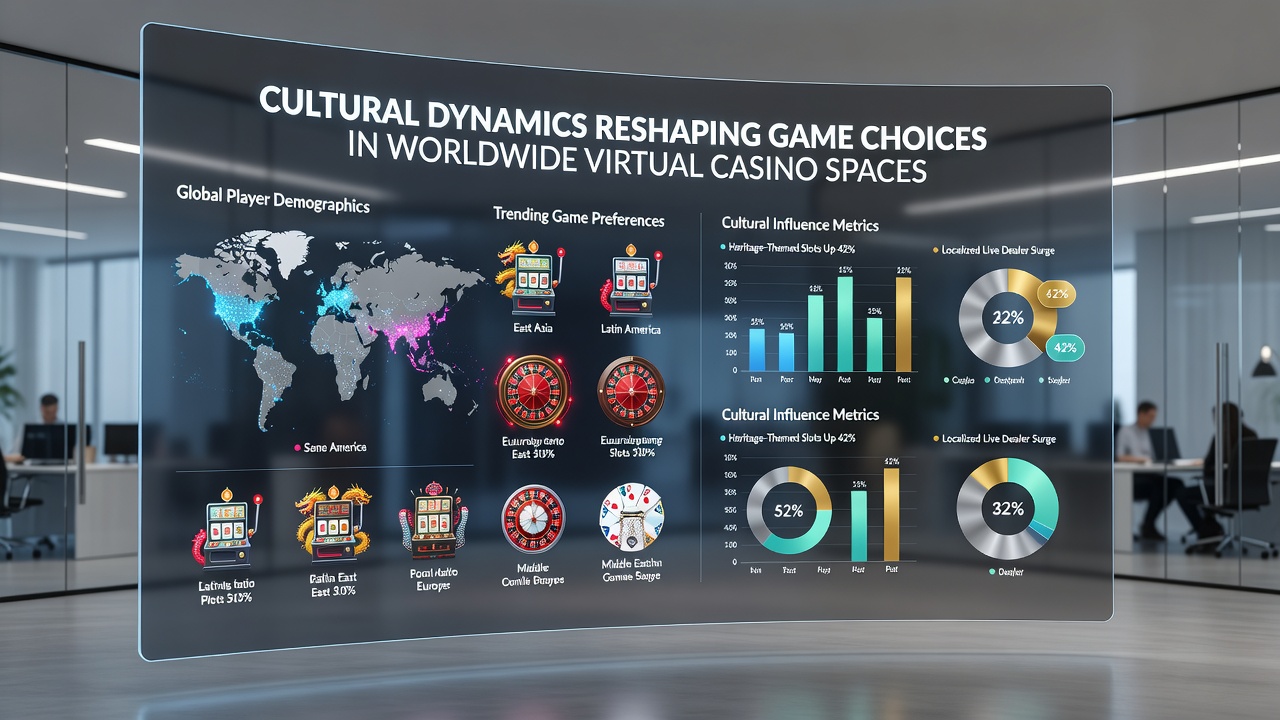
Language localization extends beyond simple translation, incorporating culturally resonant symbols and soundtracks that align with seasonal celebrations in specific countries. Operators have added limited-time events tied to Lunar New Year, Diwali, and Carnival, with participation metrics showing elevated retention during these periods compared with standard weeks.
Regulatory Frameworks and Content Availability
Government policies in multiple jurisdictions further steer game availability. Singapore’s Casino Regulatory Authority maintains strict guidelines on game approvals that favor formats with lower house edges in certain categories, while Mexico’s gaming oversight bodies have approved a broader range of skill-influenced table games. These regulatory distinctions create distinct catalogs across borders even when the underlying platform technology remains consistent.
Payment method preferences also intersect with cultural factors. Research from the European Gaming and Betting Association indicates that users in Nordic countries favor direct bank transfers and e-wallets, which in turn influences the speed at which they access high-limit table games. In Latin American markets, local payment rails tied to popular banking apps correlate with higher volumes of slot play during evening hours.
Technological Adaptations Supporting Cultural Variety
Platform providers respond by deploying modular game engines that allow rapid deployment of region-specific content without rebuilding entire applications. Metrics released in mid-2026 by several major suppliers show that titles incorporating local language voiceovers and culturally accurate artwork achieve longer average session durations across tested cohorts. These adaptations occur alongside broader efforts to maintain compliance with data protection standards that differ by region.
Community features such as chat functions and tournament structures have been modified in some markets to accommodate varying social expectations around competition and interaction. In regions where group play carries cultural weight, operators report stronger uptake of shared jackpot pools compared with solo progressive formats.
Conclusion
Worldwide virtual casino environments continue to diversify as cultural dynamics influence both player selections and operator decisions. Aggregated usage data, regulatory variations, and demographic shifts collectively determine which games receive prominence in different markets. As of August 2026, these patterns remain visible in platform analytics and licensing records, underscoring the ongoing alignment between global technology and localized preferences.